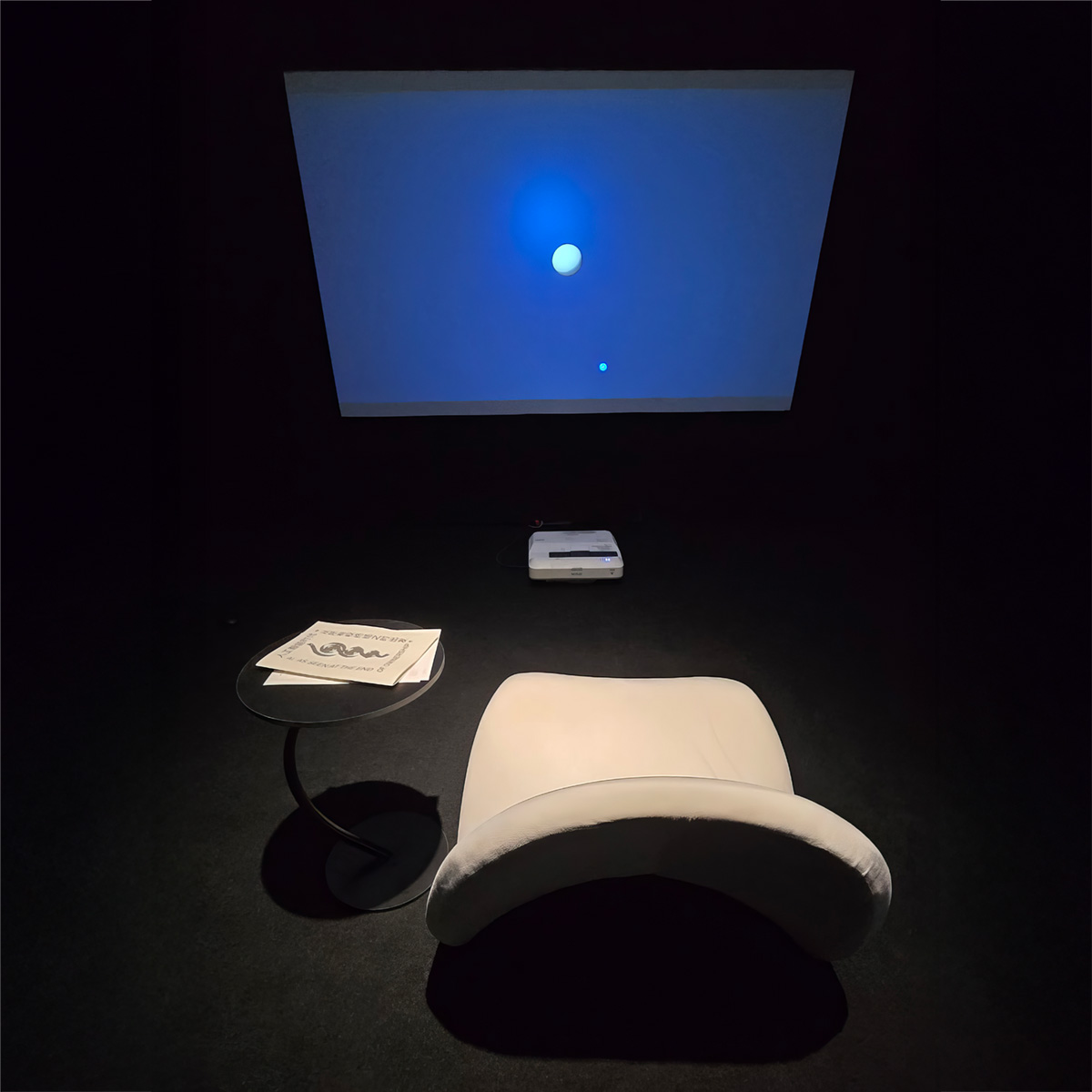
AI, As Seen At The End Of Ownership
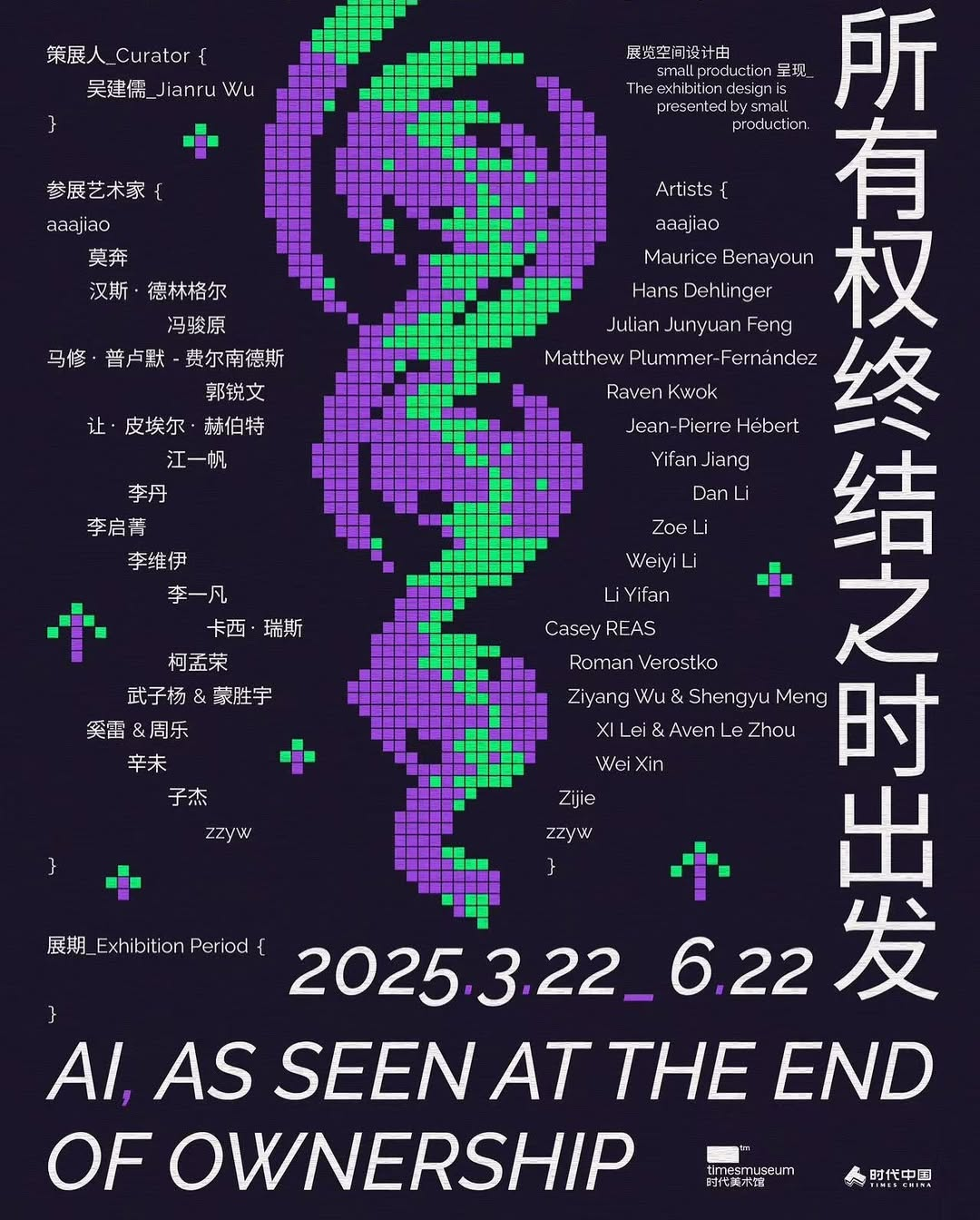
Participating artists:aaajiao, Maurice Benayoun, Hans Dehlinger, Julian Junyuan Feng, Matthew Plummer-Fernández, Raven Kwok, Jean-Pierre Hébert, Yifan Jiang, Dan Li, Zoe Li, Weiyi Li, Li Yifan, Casey REAS, Roman Verostko, Ziyang Wu & Shengyu Meng, XI Lei & Aven Le Zhou, Wei Xin, Zijie, zzyw
Curated by: Jianru Wu
Exhibition Design: Small Production
Exhibition Dates: March 22 – June 22, 2025
Exhibition Location: Guangdong Times Museum(Huangbian North Road, Baiyun Avenue, Guangzhou, Guangdong, China)
Introduction
The exhibition brings together 19 artists and groups from around the world, utilizing a diverse range of media, including plotter drawing, generative art, AI systems, video, game, animation, and robotic interactive installation. It explores how technology reshapes art traditions and fosters new conceptual expressions through human-machine collaboration. This exhibition is a response to the history of conceptual art and a question for the future: as algorithms infiltrate art practices, what evolutionary paths will conceptual art follow?
Generative art and conceptual art share roots in the 1960s yet have long followed different paths. Generative art uses computer algorithms to produce visual forms that are both consistent and endlessly varied; conceptual art, by contrast, emphasizes putting ideas ahead of physical objects, challenging traditional art’s focus on materiality and narrative. Today, the widespread use of artificial intelligence has blurred this boundary. Text-based prompts have replaced complex programming as the core directive for creation. Latent Diffusion Models simplify image generation through dimensionality reduction, allowing artists to control visual output by simply entering text. This machine-like “conceptualized” output not only echoes the idea of conceptual art pioneer Sol LeWitt’ s idea that “The idea becomes a machine that makes the art,” but also raises practical questions regarding issues such as algorithmic “hallucinations” (unexpected results due to data bias), hidden computational layers, and deepening biases in large-scale model training.
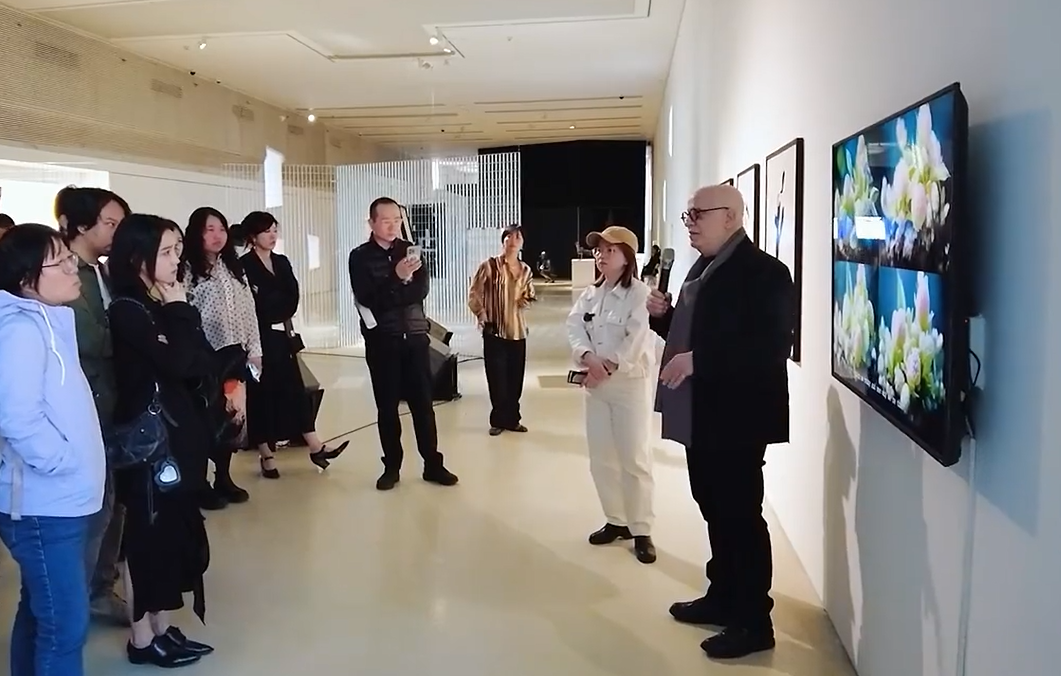
Speech on site
The exhibition is divided into three sections. The first section presents generative art alongside contemporary works that engage with technology. On one hand, generative art offers an intuitive understanding of computation, recursion, and systematic design; on the other, it invites us to reconsider that these “algorists” are not merely generating similar yet varied lines through repetitive rules, but are conducting cross-disciplinary cultural experiments that probe the essence of technology.
The second section uses cutting-edge technology to explore the purpose of art in an AI context, challenging the limitations, noise, and unexpected outcomes produced by computation as well as the social biases that may be reinforced through recursive processes.
The final section revisits the issue of “authorship.” Although this topic has been widely discussed in the context of internet and post-internet art, the era of artificial intelligence offers a completely new framework for understanding creation and ownership. Shaped by the evolution from Web 1.0 through 2.0 to 3.0, art ownership is beginning—or may have already shifted—toward a shared model with machines. Algorithms can analyze, process, and recognize images, thereby “possessing” a form of knowledge or understanding. This notion of “algorithmic ownership” is a metaphor that, in a data-driven age, challenges not only the boundaries of copyright law but also brings new insights into the nature of digital objects.
Works on exhibition
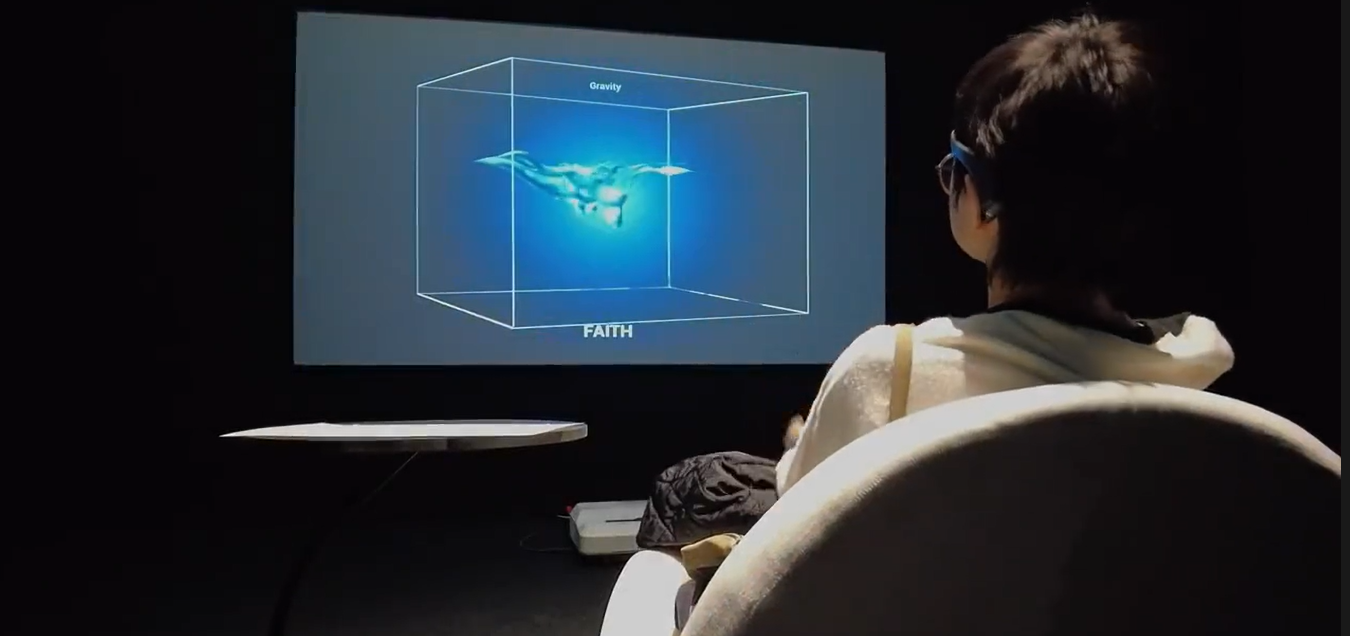
Neuro-Design Station, 2016-2023 Interactive installation, projection Collaborating artist: Nicolas Mendoza Leal
The Neuro-Design Station is dedicated to exploring the neuro-design of human values. In this installation, viewers assume the role of “Brain Workers,” shaping abstract human concepts through brain-computer interaction and transforming these forms into tangible objects. The work examines how expression can transcend words to articulate human abstractions-such as POWER, LOVE, MONEY, FREEDOM, and HUMOR-while exemplifying the interplay between mind and matter, concepts and objects, and ultimately, humans and machines.

Crypto Characters of Values, 2021 Inkjet prints,100 x 100 cm each
Neuro-designed VoV (Value of Values) tokens function as characters that encapsulate human values. In essence, giving form to an abstract human concept is akin to inventing a new script-a new language. It is the cumulative result of a chain of Brain Workers refining the “characters” that represent each value. The final outcome of the neuro-design process is tokenized as an NFT; its 3D model can be interpreted as either a 2D or 3D “reification,” with 2D prints serving as novel characters that each express a distinct human value.

The Interpreters, 2021 Video 15′ 49″ Al collaborating artist: Sam Chan
In The Reader & The Interpreters, Maurice Benayoun examines how artificial intelligence can recognize and interpret these newly minted characters of human values. The work delves into the parallels between neuro-designed VoV characters and traditional Chinese calligraphy-as well as the interplay between symbols and ideograms-representing a bold endeavor to integrate artificial intelligence into art and cultural discourse.
Special thanks
Special Thanks to:School of Arts, Nanjing University;Art and Architecture Intelligence Lab, NanjingUniversity;Wang Xiao, Nanjing University;Lin Mengjun, Nanjing University;Osage Gallery HK SAR
Links
Exhibition Website Information Page:https://www.timesmuseum.org/cn/program/ai-as-seen-at-the-end-of-ownership
Exhibition Wechat Article Page:https://mp.weixin.qq.com/s/5lkFAaA1B3Q3M12ome8wDA